Showing posts with label colorful. Show all posts

February 10, 2015

SO…SPARKLY +3+


This is a splendid fairywren (Malurus splendens), which is great. It’s native to Australia, especially Queensland and New South Wales.

They eat bugs. If bugs make you this awesome-looking, I honestly will take to eating bugs.

Apparently crickets taste like apples! So it shouldn't be too hard to change my diet like that

December 18, 2014

KoC Fact: Caecilians are Cute in a Weird Way


The yellow-striped caecilian (Ichthyophis beddomei) is perhaps the weirdest amphibian you will see all day. It’s from the order Gymnophiona and is also called the Beddome’s caecilian and the yellowbelly ichthyophis.

Distributed widely in the jungles of the Western Ghats, I. beddomei is very cuddly and cute and deserves lots more attention. :) They are primarily aquatic though they do like to slither along land. They can be kept as pets (I WANT ONE OMG).

They eat all sorts of things and lay clutches of weird chickenlike eggs. Please do not fry these eggs, as I. beddomei is awesome.

December 17, 2014

“!”


This is the extremely beautiful and colorful exclamatory Dawkins’ barb (Dawkinsia exclamatio), also known as the exclamation point Dawkins’ barb and the false arulius barb.

It is quite similar in looks, finnage, size, and distribution to common arulius barb (D. arulius), which has longer fins and looks like this:


Exclamatory Dawkins’  barbs are found in sandy or pebbly regions of the Kallada River, which is in Kerala, India. They eat small invertebrates and algae.

December 12, 2014

ROOM TOUR #1: Meet dem Pets

So, today I shall do a tour of the plants and fish in my room; it’s the first in a series of room tours I’ve decided to do! This marks the third little miniseries on this blog, the other two being Favorite Creatures (a list I post at the beginning of every month of my favorite animals I wrote about last month) and KoC Facts (short articles with a snappy title, such as KoC Fact: Stings to the Brain Really Calm Bugs Down! and KoC Fact: Grunions are Piggies in Fish Form!).

So anyway, I have three tanks—my sister’s 10 gallon hexagonal tank (dimensions: 7 inches on the sides by 16 inches tall), a 20 gallon high tank (dimensions: 12 inches wide, 24 inches long, 16 inches tall) and my sister’s 2½ gallon bowfront-style tank (dimensions: 8 inches long by 12 inches tall by 4 inches wide). Yep, I keep all my sister’s fish in my room. :)

First, the bowfront-style: it has blue gravel, two rocks (including a Hakkai seki rock from Japan), and a few artificial plants. Here’s the shy Siamese fightingfish (Micracanthus splendens) who calls the tank its home:


He’s extremely shy and his name is Tracks.

Onward to the 10 gallon! It’s got some silver sand at the bottom and is kind of overstocked; our mistake! :) It’s decorated with a fake Amazon swordplant, a fake “GloPod™” plant that glows in the dark, a large fake shell, some fake bamboo, and a ceramic sign that reads, “No Fishing!” Yep, everything’s fake. Sorry.

Here’s my rainbow shark minnow (Epalzeorhynchos frenatum), who I keep in the 10-gallon because he’s much too aggressive for my 20-gallon community—wait, two of the fish in the 10-gallon are mine, like the southern platyfish (Xiphophorus maculatus).


Here are the two skunk loaches (Syncrossus morlet) squabbling over something, maybe some food—who knows? They’re skunk loaches. A green GloFish tetra (a genetically modified blackamoor tetra, Gymnocorymbus ternetzi) looks on.


What, you may ask, do I feed my fish? Simple question to answer; all my fish (except the Mastacembelus circumcinctus) eat these:


Left to right (prices are from Amazon.com): TetraMin® Tropical Flakes ($13.59), Wardley® Shrimp Pellets ($3.49), Wardley® Cichlid Crumbles ($5.36)

Stocking in the 10-gallon (seven fish in all)…
2 GloFish™ tetras, one orange and one green
2 skunk loaches
1 rainbow sharkminnow
1 southern platyfish
1 goldfish (Carassius auratus)

And on to the 20-gallon!

My 20 gallon is PLANTED! It has 10 different rocks on the right side of the tank, and a large piece of driftwood spanning the entire length of the tank.

Here is my freshwater angelfish (Pterophyllum scalare), Seraph:


He’s a beautiful animal and is full of personality. Also, I have a bronze cory (Corydoras aeneus) and a spinecheek loach (Pangio kuhli), which you can both see in the next picture, hiding under the driftwood…


Look closely in the back of the cory, and you might see that striped head—that’s the loach!
Here are some aquascaping materials I decided to photograph:


In case you didn’t know, aquascaping is like underwater landscaping. It’s cool.

Here’s my larger Java fern (Microsorum pteropus), with the two of the three rummynose tetras (Hemigrammus bleheri) in the background:


Look by the doorknobs, and you can see the tetras. I apologize that my door is in the way and you can kind of see the reflection of my hands holding the camera…sorry about that, folks!

Here’s my “rock garden,” home to the famous ten rocks mentioned before in this article, and some schooling fish—the rummynose tetras, a lonely cardinal tetra (Paracheirodon axelrod), and my mated pair of cherry barbs (Pungti titteya):


To close is a picture of my golden creeping Jenny (Lysimachia nummularia ‘Aurea’):


Stocking list for 20 gallon:

1 Mastacembelus circumcinctus
1 common freshwater angelfish
3 rummynose tetras
1 cardinal tetra
2 cherry barbs
1 spinecheek loach
1 bronze cory
1 orange finned loach (Yasuhikotakia modestus)
5 stalks of lucky bamboo (Dracaena sanderiana)
1 Amazon swordplant (Echinodorus amazonicus)
1 golden creeping Jenny
1 guppy grass (Najas marina), plus countless guppy grass clippings
2 Java ferns

Thanks for reading!

December 11, 2014

My Fish Tank Tour :)

Hi everybody! Today I’m going to give a photographic tour of my 20 gallon planted fish tank, but first, a few details:

FISH:
Bronze cory (Corydoras aeneus) x 1
Common freshwater angelfish (Pterophyllum scalare) x 1
Cherry barb (Pungti titteya) x 2
Cardinal tetra (Paracheirodon axelrod) x 1 (getting four more!)
Half-banded spinyeel (Mastacembelus circumcinctus) x 1
Orange-fin loach (Yasuhikotakia modestus) x 1
Rummynose tetra (Hemigrammus bleheri) x 3
Spinecheeked loach (Pangio kuhli) x 1 (getting another!)

PLANTS:
Amazon swordplant (Echinodorus amazonicus) x 1
Golden creeping jenny (Lysimachia nummularia “Aurea”) x 2
Guppy grass (Najas marina) x 4
Java fern (Microsorum pteropus) x 2
Lucky bamboo (Dracaena sanderiana) x 5

Now for a quick tour! Here’s the tank:


It’s awesome; the water’s extremely clear and the fish are very happy. Sadly two cardinal tetras have died but I’m getting four more to keep the current one (“Swimmy”) happy. :)

The main centerpiece of the tank is a piece of lovely mopani driftwood, with eye-catching black gravel, creating a pleasing effect:


As you can see, the rummynose tetras are crowding around the driftwood, making it look prettier. :) The two Java fern plants surround the driftwood, which I did skillfully and masterfully and—

Biased? ME? Psssh.

The whole tank is comprised of two different aquascapes. On the left is a bamboo forest…


…and on the right is a “rock garden” (I just call it that ’cuz of rocks and plants. :3):


If you look behind one of the bamboo stalks, you’ll see a Hakkai-seki stone. It’s a type of Japanese aquascaping stone used in many of Takashi Amano’s aquariums. :)

Here’s the spinyeel peeking out from under a rock. See him?

“See meh?”
You can just see his head.

I hope you like my fish tank. BYE!!

December 08, 2014

Evil Birds of Evilness


This is the blue-capped ifrit (Ifrita kowaldi), an absolutely EVIL bird that is endemic to the rainforests of New Guinea.

Wait. Why is it evil?

Because of the batrachotoxins it hides in its skin and feathers, thats why! This causes tingling and numbness on the hand of the person holding it. The toxins are acquired from Choresine beetles which the species eats.

Yum!

They’re evaluated as “Least Concern” by the IUCN Red List of Threatened Species.

These things are EVIL. 

December 06, 2014

Scary Colorful Worms.


This slightly beautiful worm is a bearded fireworm (Hermodice carunculata). It’s so pretty, right? I agree. It’s a worm from the order Polychaeta that lives in Caribbean reefs across the Antilles, the Maltese archipelago, the Mediterranean, and the waters of Cyprus. Its habitat is mostly on reefs.

Now, what’s so horrible about that?

Look out, world—the bearded fireworm is DESTROYING REEFS!!

They eat all sorts of corals, and, to make it worse, they have a sting that—well…stings?

Bearded fireworms are very slow animals, but don’t be like, “Omg haha it #canthurtme.” A) Why are you doing hashtags?; and B) YOU IDIOT IF ITS BRISTLES TOUCH YOUR SKIN THEY INJECT A NEUROTOXIN INTO YOU WHICH CAUSES BURNING AND NAUSEA!

Here’s the nice, kawaii, awesome part. The sting symptoms clear up in just about thirty minutes, and, at worst, a few hours. AND, many fish are currently doing their part to control the bearded fireworm population. These include the creole fish (Clepticus parrae, which, as a bonus, is absolutely beautiful):


the pineapplefish (Cleidopus gloriamaris)—these things are adorable, by the way; “gloriamaris” means “glory of the sea”:


and the absolutely beautiful French angelfish (Pomacanthus paru):


By the way, young P. paru look way different. I’ll save that as a surprise in a later post…

December 01, 2014

Magical Mangos (Wait…What?)


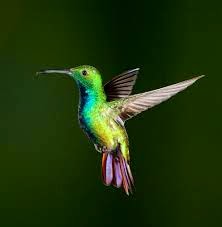
Dis is da cute, weirdly-named green mango (Anthracothorax viridis) from Puerto Rico, mostly in the El Toro Wilderness. It’s a large species of hummingbird, described in 1801 by Louis Jean Pierre Vielliot (1748 – 1831), a French naturalist.

Green mangos enjoy hanging around flowers of the lobsterclaw (my favorite lobsterclaw is the parrot lobsterclaw, Heliconia psittacorum).

Go mangos! They taste good.

Meaning the fruit, of course. Heh. Heh heh.

November 29, 2014

The Little Fish who Sports a Fu Manchu and is the Color of Maraschino Juice


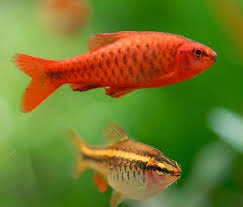
Meet the aptly-named cherry barb (Pungti titteya), who has many different variations on its binomial name: Puntius titteya, Capoeta titteya, Barbus titteya, Barbodes titteya, Barbonymous titteya, Cyprinus titteya, or Deraniyagala titteya.

This fish is great for a 10-gallon home aquarium, and it will breed in a 5-gallon. It enjoys densely planted aquariums, whether the plants be live, silk, or plastic. I recommend live, as it mimicks the cherry barbs’ natural habitat in Sri Lanka, Mexico, and Colombia.

This cute fish comes in two morphs, the normal type and the albino type. Albino cherries are quite rare. The last picture is a male albino barb. If you look closely at P. titteya, you will notice it has little barbels (whiskers) that look like a fu manchu, making it all the cuter.

Good tankmates for this fish are Corydoras catfish, Acanthophthalmus loachesspiny eels (genera Mastacembelus and Macrognathus), and freshwater shrimp. Be careful, as they will eat smaller baby fish and baby shrimp.

Cherry barbs enjoy a sand substrate to dig around for food in. In the wild, they eat small bugs and copepods and live in shaded, calm, shallow water, full of dead leaves and with a sandy bottom. They should be kept in water of about 73º – 81º Celsius, and a pH of 6.0 – 8.0.

I enjoy my cherry barb pair. I plan to get more in the future and, with luck, to breed them. (Sorry about another fish post!)