Showing posts with label cool. Show all posts

December 20, 2014

Borderlining on Weird…


This weird-looking critter is the Brazilian treehopper (Bocydium globulare), and it seriously looks like a cute little thingy that just fell from space.

Guess where the BRAZILIAN treehopper lives, everybody? Brazil! I was so shocked when I found that out.

The Brazilian treehopper is usually found on glory bushes (Melastomataceae), which they nom on happily.

Sadly, I can’t find any further info on this weird insect, but I’m glad I found out about it!

December 15, 2014

It's a Little Lizard Doughnut!


When it rolls into an armadillo-y shape, it looks like a spiky lizard doughnut!


Meet the armadillo girdled lizard (Ouroborus cataphractus) from South Africa! When this cute critter feels upset, it rolls itself into a ball and bites its tail to hold that way. I’m not sure if it rolls around or not…but if so, YAY!

In 2011, it was moved into a separate genus of its own—Ouroborus—from another girdled lizard genus, Cordylus. Another species of lizard, the giant girdled lizard, was also given a new binomial name. J.R.R. Tolkien lovers will love this one: Smaug giganteus!

Armadillo girdled lizards are commonly sold as pets. They are very easy to breed in captivity, but their numbers are decreasing in the wild from collection. They can live up to 25 years in captivity.

It eats small invertebrates, such as spiders and termites, but also some plant material.

I WANT ONE! I’d want one even more if it didn’t harm the environment. :,(

December 12, 2014

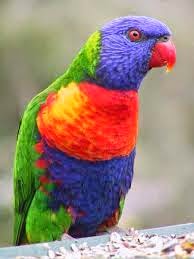
KoC Fact: This Bird is Extremely Tie-dye


Rainbow lories (Trichoglossus haematodus) are stunning Australasian parrots from Australia (gasp!), Indonesia, Tasmania, New Guinea, Papua New Guinea, New Caledonia, Vanuatu, and the Solomon Islands. They have been introduced to Perth (Purrrrth if you’re a cat), Auckland in New Zealand, and Hong Kong.

This species has twelve subspecies in total, and they do not have any immediately noticeable sexually dimorphic (different coloration, size, etc. in the two genders) traits, but males do have more orange on their breasts and is more stocky and robust, with a more square head.

Shockingly, the beautiful tie-dye birdehz you perceive above are PESTS! Um, WHAT? This is because they eat large amounts of crops and fruit that are grown commercially.

I still consider these beautiful parrots as an awesome thing to see at a zoo. Australian farmers may not agree with me, but wutewa*. (I spelled that right! See? Yes.)


*Whatever.

ROOM TOUR #1: Meet dem Pets

So, today I shall do a tour of the plants and fish in my room; it’s the first in a series of room tours I’ve decided to do! This marks the third little miniseries on this blog, the other two being Favorite Creatures (a list I post at the beginning of every month of my favorite animals I wrote about last month) and KoC Facts (short articles with a snappy title, such as KoC Fact: Stings to the Brain Really Calm Bugs Down! and KoC Fact: Grunions are Piggies in Fish Form!).

So anyway, I have three tanks—my sister’s 10 gallon hexagonal tank (dimensions: 7 inches on the sides by 16 inches tall), a 20 gallon high tank (dimensions: 12 inches wide, 24 inches long, 16 inches tall) and my sister’s 2½ gallon bowfront-style tank (dimensions: 8 inches long by 12 inches tall by 4 inches wide). Yep, I keep all my sister’s fish in my room. :)

First, the bowfront-style: it has blue gravel, two rocks (including a Hakkai seki rock from Japan), and a few artificial plants. Here’s the shy Siamese fightingfish (Micracanthus splendens) who calls the tank its home:


He’s extremely shy and his name is Tracks.

Onward to the 10 gallon! It’s got some silver sand at the bottom and is kind of overstocked; our mistake! :) It’s decorated with a fake Amazon swordplant, a fake “GloPod™” plant that glows in the dark, a large fake shell, some fake bamboo, and a ceramic sign that reads, “No Fishing!” Yep, everything’s fake. Sorry.

Here’s my rainbow shark minnow (Epalzeorhynchos frenatum), who I keep in the 10-gallon because he’s much too aggressive for my 20-gallon community—wait, two of the fish in the 10-gallon are mine, like the southern platyfish (Xiphophorus maculatus).


Here are the two skunk loaches (Syncrossus morlet) squabbling over something, maybe some food—who knows? They’re skunk loaches. A green GloFish tetra (a genetically modified blackamoor tetra, Gymnocorymbus ternetzi) looks on.


What, you may ask, do I feed my fish? Simple question to answer; all my fish (except the Mastacembelus circumcinctus) eat these:


Left to right (prices are from Amazon.com): TetraMin® Tropical Flakes ($13.59), Wardley® Shrimp Pellets ($3.49), Wardley® Cichlid Crumbles ($5.36)

Stocking in the 10-gallon (seven fish in all)…
2 GloFish™ tetras, one orange and one green
2 skunk loaches
1 rainbow sharkminnow
1 southern platyfish
1 goldfish (Carassius auratus)

And on to the 20-gallon!

My 20 gallon is PLANTED! It has 10 different rocks on the right side of the tank, and a large piece of driftwood spanning the entire length of the tank.

Here is my freshwater angelfish (Pterophyllum scalare), Seraph:


He’s a beautiful animal and is full of personality. Also, I have a bronze cory (Corydoras aeneus) and a spinecheek loach (Pangio kuhli), which you can both see in the next picture, hiding under the driftwood…


Look closely in the back of the cory, and you might see that striped head—that’s the loach!
Here are some aquascaping materials I decided to photograph:


In case you didn’t know, aquascaping is like underwater landscaping. It’s cool.

Here’s my larger Java fern (Microsorum pteropus), with the two of the three rummynose tetras (Hemigrammus bleheri) in the background:


Look by the doorknobs, and you can see the tetras. I apologize that my door is in the way and you can kind of see the reflection of my hands holding the camera…sorry about that, folks!

Here’s my “rock garden,” home to the famous ten rocks mentioned before in this article, and some schooling fish—the rummynose tetras, a lonely cardinal tetra (Paracheirodon axelrod), and my mated pair of cherry barbs (Pungti titteya):


To close is a picture of my golden creeping Jenny (Lysimachia nummularia ‘Aurea’):


Stocking list for 20 gallon:

1 Mastacembelus circumcinctus
1 common freshwater angelfish
3 rummynose tetras
1 cardinal tetra
2 cherry barbs
1 spinecheek loach
1 bronze cory
1 orange finned loach (Yasuhikotakia modestus)
5 stalks of lucky bamboo (Dracaena sanderiana)
1 Amazon swordplant (Echinodorus amazonicus)
1 golden creeping Jenny
1 guppy grass (Najas marina), plus countless guppy grass clippings
2 Java ferns

Thanks for reading!

December 11, 2014

My Fish Tank Tour :)

Hi everybody! Today I’m going to give a photographic tour of my 20 gallon planted fish tank, but first, a few details:

FISH:
Bronze cory (Corydoras aeneus) x 1
Common freshwater angelfish (Pterophyllum scalare) x 1
Cherry barb (Pungti titteya) x 2
Cardinal tetra (Paracheirodon axelrod) x 1 (getting four more!)
Half-banded spinyeel (Mastacembelus circumcinctus) x 1
Orange-fin loach (Yasuhikotakia modestus) x 1
Rummynose tetra (Hemigrammus bleheri) x 3
Spinecheeked loach (Pangio kuhli) x 1 (getting another!)

PLANTS:
Amazon swordplant (Echinodorus amazonicus) x 1
Golden creeping jenny (Lysimachia nummularia “Aurea”) x 2
Guppy grass (Najas marina) x 4
Java fern (Microsorum pteropus) x 2
Lucky bamboo (Dracaena sanderiana) x 5

Now for a quick tour! Here’s the tank:


It’s awesome; the water’s extremely clear and the fish are very happy. Sadly two cardinal tetras have died but I’m getting four more to keep the current one (“Swimmy”) happy. :)

The main centerpiece of the tank is a piece of lovely mopani driftwood, with eye-catching black gravel, creating a pleasing effect:


As you can see, the rummynose tetras are crowding around the driftwood, making it look prettier. :) The two Java fern plants surround the driftwood, which I did skillfully and masterfully and—

Biased? ME? Psssh.

The whole tank is comprised of two different aquascapes. On the left is a bamboo forest…


…and on the right is a “rock garden” (I just call it that ’cuz of rocks and plants. :3):


If you look behind one of the bamboo stalks, you’ll see a Hakkai-seki stone. It’s a type of Japanese aquascaping stone used in many of Takashi Amano’s aquariums. :)

Here’s the spinyeel peeking out from under a rock. See him?

“See meh?”
You can just see his head.

I hope you like my fish tank. BYE!!

December 02, 2014

Book Review: “Make Your Own Aquarium”

Hi! Today I’m doing a book review on the book Make Your Own Aquarium with 29 Stickers by Cathy Beylon.


SUCH an awesome book. Though the aquarium on the cover is very overstocked, *ahem!* Here’s how my finished aquarium, an Amazonian biotope, looked:


I rate this book 8 out of 10 stars (10 being highest) because they probably could have had more fish and decor.

They had a lot of different classic fish:

Neon tetras (Paracheirodon innesi)
Discus (Symphysodon tarzoo)
Zebrafish (Barilius rerio)
Freshwater angelfish (Pterophyllum scalare)
Endler’s livebearers (Poecilia wingei)
Pimelodus pictus
Blackamoor tetra (Gymnocorymbus ternetzi)
Midget topminnows (Heterandria formosa)
Goldfish (Carassius auratus)
Pearl gourami (Trichogaster leerii)
Siamese fightingfish (Micracanthus splendens)
Oscar (Astronotus ocellatus)
Swordtail (Xiphophorus helleri)

A lot of plants, too, like:

Anubias barteri
Cabomba caroliniana
Myriophyllum aquaticum
Vallisneria spiralis
V. nana
Echinodorus grisebachii

I loved this little sticker book. I think you should try it out. :3

I Love the Smell of Almonds! :3


This is the night train (Harpaphe haydeniana), also known as the almond-scented millipede, cyanide millipede or even (adorably) the “clown millipede.” By the way, did I mention this species is actually…pretty?

Pretty millipedes! What will they come up with next!?

Anyway, the night train is a species of “polydesmidan”, meaning it’s flat-backed. I prefer the cute, unusual-looking “polyxenidan” millipedes. I mean, who wouldn’t? This is the polyxenidan bristly millipede (Polyxenus lagurus):

But, enough talking. We’re here for night trains alone.

Though beautiful and exotic-looking, night trains hail from your average woodland, from the Alaska Panhandle to California. The pretty colors warn predators that this millipede will ooze hydrogen cyanide which will probably kill its predators! Yay!

It smells like…

Almonds.

Guess why it’s called the almond-scented millipede.

Also, guess what it eats? It eats rotting plants! Double-yay!

Lastly, here’s a very similar-looking species, Orthomorpha coarctata from Southeast Asia.


Thank you for reading. Merry Christmas in 24 days!

November 29, 2014

MAJOR Aquarium Updates!

Guess what I got today?

A 20-gallon aquarium. :3 I give it 10 out of 10 stars (10 being best. Dur.)

Here it is in the box:


This is probably one of the greatest, if not the greatest, aquarium update I’ll post. My fishies will have more swimming space and be all happy and kawaii.

And so will I. (Minus the “kawaii”.)

It came with a lot of stuff, too. A filter. An LED light hood, the aquarium (who knew, right?), a net:

It’s mint-green, too. *Favorite color*. It also came with a water sampler kit, a thermometer, and a heater which I probably won’t use, unless the LEDs aren’t good for heating the water optimally, in which case, I will use the heater.

Did that make any sense at all? Who cares.

Here’s what my 10-gallon looks like right now:

I know. It’s very homely. I’m going to post frequent updates on what I do.

Also, while I was getting the aquarium, I picked up some frozen foods for my eel. It was four-pack sampler, with Spirulina algae and brine shrimp nauplii (Artemia salina), bloodworms, and several other delicious-looking entrées.

Also, I have set up a quarantine tank, in case my fish get sick or I get new fish. New fish could have diseases, so you always quarantine them first. My quarantine, shown below along with my 2.5-gallon skunk loach (Syncrossus morleti) species tank and my 3-gallon Siamese fightingfish (Micracanthus splendens). The quarantine tank is a 10-gallon tub with a few sparse decorations. The live plants in there are from the 10-gallon aquarium; they’re waiting out a bit till I set up my 20. :)


Thanks for reading! Be sure to check out my friend Annie’s blog! :) She posts delicious recipes and some species profiles on mammals, like otters, dogs, cats, and—my favorite—moles!

November 28, 2014

LOOK!! It's the Bluebird of Happiness!


One of my favorite songs is Birdhouse in Your Soul by “They Might Be Giants.” It’s an awesome song making fun at an old product, which is a blue canary nightlight that looked insanely stupid.

Now, we have found the ACTUAL BIRD! It’s the blue chaffinch (Fringilla teydea), and okay, it’s not actually the bird the canary nightlight is based off.

This beautiful, adorably fat creature lurks (lurks?) on the islands of Tenerife and Gran Canaria in the Canary Islands. The male is a beautiful sky-blue, while the female shows a darker, more homely shade of gray. This is an example of sexual dimorphism.

This animal’s habitat is primarily dense Canary pine (Pinus canariensis) forests, in the highlands. They usually eat the seeds of the pines.


Happy Black Friday from the Magpie-Shrike!


These cute, very pretty little birds, magpie-shrikes (Urolestes melanoleucus), have a very scary and disturbing habit that I’m going to save for the end. For now, don’t hate these pretty little creatures.

Until the end. I’m going to stop being so repetitive now.

Magpie-shrikes are found chiefly in parts of Africa, such as Angola, Mozambique, Zimbabwe, Zambia, South Africa, Swaziland, Tanzania, Namibia, Botswana, and Kenya.

Now for the scary, gross, horrifying, disturbing part. What do magpie-shrikes eat?

Not scary, eh?

Eh?

Eh.

Animals impaled on thorns.


They impale them themselves, you see. First they kill it—it can be anything from a small bird, a grasshopper, a treefrog, or a mouse to SMALL KITTEN—and then impale it on a thorn to save for later.

And it does this ALL DAY.

Oh, yeah. Why “Black Friday”? Two reasons: A) Magpie-shrikes are black and B) it gets tons of animals, just like shoppers get tons of stuff.

I know. I’m so clever.